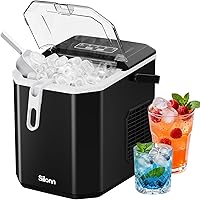
How to Fill a Portable Ice Maker
To fill a portable ice maker, open the fill lid, pour in water up to the MAX line, then close it and press the power button. On most countertop units that means about 1.2 to 2 liters of water and ice in roughly six minutes.
On this page (10 sections)
- How to fill a portable ice maker step by step
- Where does the water go on a countertop ice maker?
- How much water should you add, and what happens if you overfill?
- How do you know when to refill?
- Can you fill it while it's running?
- What water should go in a portable ice maker?
- Which portable ice makers are easy to fill?
- Why does the machine stop after a refill?
- How do you keep the fill routine clean between uses?
- What should you avoid when filling a portable ice maker?
You fill a portable ice maker by pouring drinking water into its reservoir up to the marked maximum, closing the lid, and switching it on. That one step starts the whole cycle, and the machine handles the rest until the basket fills.
The job takes under a minute once you know where the tank is and how full it should be. Below is the order to do it in, plus the fill-level mistakes that quietly slow a countertop unit down.
How to fill a portable ice maker step by step
Fill, close, power on, and pick a cube size is the whole routine. It works the same way on the common countertop designs, whether the tank sits under a flip lid or in its own bay.
- Set the machine on a flat, dry counter near a grounded outlet.
- Lift the fill lid and pour into the reservoir.
- Pour drinking water in until it reaches the MAX line.
- Close the lid until it clicks.
- Plug in the unit and press the power button.
- Choose small or large cubes and let the first batch run.
Give the machine 6 to 20 minutes for the first cubes. The Silonn SLIM01B makes 9 bullet cubes in about 6 minutes, and most units land in that range.
Once the first batch drops, the machine keeps cycling on its own. You only step back in when the low-water light comes on or the basket fills up.
The SLIM01B uses 1.7 A while making ice and 2.0 A at harvest, so a standard kitchen outlet is all it needs.
Where does the water go on a countertop ice maker?
The water goes into a reservoir that feeds the evaporator, not into the ice basket. The basket only collects finished cubes, so pouring there does nothing useful.
The lid sits over the reservoir beside or behind the basket, and the water path stays separate from the basket bay.
Open the lid and look for the MAX line molded into the plastic. That line is your target, and it matters more than the total capacity printed on the box.
The printed figure is the daily ice output, not how much water you pour in.
State the water volume plainly when you fill. Most compact units hold 1.2 L to 2 L, which is two to four large glasses.
That water then feeds the evaporator until it's used up.
How much water should you add, and what happens if you overfill?
Fill to the MAX line and no higher. The line leaves headroom for the water to move as the machine cycles, and a little space prevents splashing into the basket bay.
Overfilling is the most common beginner mistake. Water can run into the ice basket, drip past the lid, and, on some units, trip the full-basket sensor early.
Underfilling has its own cost. A shallow tank means the pump pulls air sooner, the low-water light comes on mid-cycle, and your cubes come out small or thin.
If you can't see a line, fill until the water sits about an inch below the rim of the reservoir. That gap is enough to keep splashes inside.
On a unit with a 1.8 L tank like the SLIM33B, that still leaves plenty of water for a long session.
How do you know when to refill?
The machine tells you with a light. A low-water indicator comes on, or an LED panel changes color to show the tank is empty.
The Silonn SLIM33B uses a four-color touch panel where each color signals making ice, low water, full basket, or cleaning. It's a quick read once you've seen the colors once.
White, red, green, and blue each map to one state.
Don't wait for the light on a long session. Check the tank between batches if you're hosting, since a full basket and an empty tank stop production.
Refill to the MAX line again, not partway. Topping up to the line keeps the next stretch of production steady.
A small partway pour can leave the tank below the working level and restart the low-water light.
Can you fill it while it's running?
Yes, you can top up a running unit, as long as you add water to the reservoir and not the basket. The cycle doesn't need to stop.
Keep a steady hand as you pour through the open lid and stop at the line.
Pause if the lid won't stay open on its own or the machine tips. Set the unit on a stable surface and unplug it before moving it.
One practical note: keep water away from the outlet. Water near the plug is a bad mix.
The Silonn SLIM33B has a 1.8 L tank that minimizes the need for refills throughout the day.
What water should go in a portable ice maker?
Use drinking water you'd happily drink cold. Bottled or filtered water keeps the tank and cubes tasting clean and leaves less mineral film behind.
Tap water works, but hard water leaves scale on the evaporator over time and gives cubes a dull, cloudy look. A clear ice maker guide explains why mineral content affects clarity.
Skip hot water. It stresses the compressor and slows the first freeze, while chilled water gives you firmer cubes sooner.
Never add flavoring, juice, or soda to the reservoir. Sugar and acid belong in the glass, not the water path.
The reservoir is not a mixing jug, and anything you put in it ends up as ice.
If you want cleaner-tasting ice over months, distilled water is the easiest habit to keep. It also means less cleaning time on the evaporator.
Which portable ice makers are easy to fill?
The easiest models combine a clear MAX line with a tank you can see and reach. Here are three that make the fill routine simple.
All three fill the same way: pour to the line, close up, press power. If you want to understand what happens after the pour, see how does a portable ice maker work.
How does the expandable basket change refill timing?
The SLIM33B's spring-loaded basket grows as ice collects. It holds up to 2.5 L of ice, or about 9 cups, where a standard basket holds about 5 cups.
That means you empty the basket less often between water refills, so the fill routine stays focused on the tank.
Why does the machine stop after a refill?
It usually isn't full enough, or the basket is already full. A refill below the working level can trip the low-water sensor again within a cycle.
Check the ice basket first. When it's full, the machine pauses until you empty it, even with plenty of water in the tank.
The smart sensor in the SLIM01B does exactly this.
Then check that the lid is fully closed. A lid left ajar won't feed properly, and the unit may think it's empty.
Give the machine a moment after a refill. It needs a short interval to sense the new water level before the pump restarts.
A full tank with the lid closed clears the light on its own.
If the light stays on with a full tank, unplug the unit for a minute and plug it back in.
How do you keep the fill routine clean between uses?
Empty the tank when you finish, and run the self-clean cycle on a schedule. Standing water is the main reason ice starts tasting stale.
Silonn's SLIM21B self-clean runs for about 30 minutes after you fill the tank and hold the CLEAN button for 5 seconds with the basket out. Stronger machines in the Igloo ice maker reviews line follow similar routines.
For a full-size unit, the Antarctic Star ice maker uses a comparable reservoir layout, so the same habits apply. Fill to the line, run the clean cycle, and empty it when you're done.
Dry the reservoir fully before the next session. Wipe the lid seal, and don't refill until you're ready to make ice.
A dry tank between uses is the simplest defense against stale-tasting cubes.
What should you avoid when filling a portable ice maker?
Avoid overfilling, hot water, and pouring into the basket. Those three habits cause most of the problems people run into on day one.
Also skip moving a full unit, filling it with the power cord wet, and leaving a full tank for days. Each adds risk without adding any ice.
A full tank on a 13.7 lb machine like the SLIM21B is heavier to carry and easier to spill.
Refill to the MAX line, close the lid firmly, and press power. That's how to fill a portable ice maker correctly, and it keeps every session short and simple.
Keep a jug of filtered water beside the unit so topping up takes seconds. Your next batch will start sooner and taste cleaner.
Frequently asked questions
Can I fill a portable ice maker with hot water?
No. Use cool or room-temperature drinking water; hot water can stress the cooling system and slow the first batches.
Chilled water gets you firmer cubes sooner.
How often does the water tank need refilling?
The unit tells you. An indicator light comes on when the tank runs low, or the LED panel shifts to its water color.
With a 1.2 L to 2 L tank, expect several refills across a day of heavy use.
Can I leave water sitting in the tank overnight?
Drain it. Standing water picks up taste and can grow film inside the reservoir.
Empty the tank and let the interior dry before the next session.
Why did my ice maker stop after I topped it up?
The water is probably still below the working level, or the basket is full. Add enough to clear the low-water line and empty the basket before restarting.
Does the water I use change how clear the ice is?
It can. Bottled or distilled water has fewer minerals, so cubes look clearer and taste cleaner.
Bullet ice is never perfectly clear, but softer water helps.