Why Is My Igloo Ice Maker Not Making Ice?
An Igloo ice maker that isn't making ice often needs water, basket space, or a restart. Check the power and indicator lights, then follow the manual before cleaning or resetting it.
On this page (10 sections)
- What should you check first when an Igloo ice maker stops making ice?
- Why does the add-water light stay on?
- What does the ice-full light mean?
- Why does the machine run but produce no ice?
- Can scale or dirty water affect ice production?
- How should you set up and care for the machine?
- Why is an Igloo ice maker making small or misshapen ice?
- How do you restart an Igloo ice maker safely?
- When should you contact Igloo support?
- Which fix or replacement should you choose?
An Igloo ice maker not making ice often needs water, basket space, or a restart. Check the power and indicator lights, confirm the reservoir has water, and make room in the basket before trying a cleaning cycle.
Work through the checks in order and use the manual for your exact model. Igloo controls and cleaning steps can vary, so don't assume one model's reset or cleaner instructions apply to another.
What should you check first when an Igloo ice maker stops making ice?
Check power, water, basket space, and the indicator lights first. These simple checks often explain why production paused without needing to open the machine.
- Check that the plug is seated in a working outlet and the unit is switched on.
- Confirm the reservoir has water and is filled to the mark in the manual.
- Empty a full basket so the machine can detect space for more ice.
- Read the add-water or ice-full indicator using your model's manual.
- Keep the machine level, with its air openings clear.
If you recently moved it, settle it on a stable counter and follow the setup instructions before restarting. Don't tip it while water remains inside.
For first-use guidance, see how to use a countertop ice maker. It covers placement, filling, and the first cycle.
Why does the add-water light stay on?
A persistent add-water light can mean the reservoir is too low or the machine can't read the water level. Fill it to the mark in your manual, then check that the unit is level and the sensor area is clear.
Switch the machine off before wiping up spills or cleaning around an accessible sensor. Don't reach inside with a sharp tool or remove panels to get to hidden parts.
If the reservoir is full and the warning remains, follow the model's restart steps. Contact Igloo support if the light stays on after that.
What does the ice-full light mean?
The ice-full light usually means the basket needs to be emptied or the sensor area is blocked. Transfer the ice to a freezer, then check that nothing is in the way of the sensor.
Many countertop machines let stored ice melt instead of keeping it frozen. Emptying the basket promptly makes room for the next cycle.
If the light remains on with an empty basket, follow the manual's cleaning instructions. Don't press or bend a sensor to force production.
Why does the machine run but produce no ice?
A running sound doesn't guarantee that the machine is completing an ice cycle. Check water, basket space, airflow, and the status lights before deciding the unit needs repair.
Warm room conditions, blocked vents, or moving the machine can affect operation. Give it room around the air openings and keep it away from heat sources.
The Igloo 26 lb portable ice maker is suited to kitchens, offices, and other spaces where you want a countertop unit with clear status indicators. It makes small or large cubes, and its LED panel signals when to add water or empty the basket.
Choose this style if you have counter space and want ice available without relying on a freezer tray. Skip it if you need a built-in refrigerator unit or a machine that keeps stored ice frozen; its basket holds ice during production, so transfer it to a freezer for longer storage.
If your current machine still won't resume after the manual's checks, stop repeated power cycling and contact support. For replacement choices by ice style and space, compare ice makers for home.
Can scale or dirty water affect ice production?
Mineral scale can build up over time and may interfere with normal operation. If you see deposits or notice an unusual odor, clean and descale only with a method your Igloo manual permits.
A compatible cleaner can suit readers whose manual allows descaling tablets. STREALE describes its 24-tablet option as a citric-acid-based cleaner for countertop, portable, and commercial ice makers.
The tablets aren't intended for built-in refrigerator ice makers. Follow the machine's own cleaning and rinsing steps before making ice again.
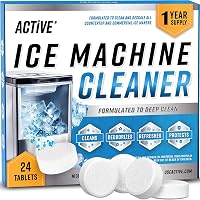
ACTIVE also describes its 24-tablet cleaner for countertop, portable, and commercial machines, and excludes built-in refrigerator ice makers. Choose a cleaner only when your model's care instructions allow it; broad compatibility language doesn't replace the manual.
For a model-aware cleaning walkthrough, see how to clean an Igloo ice maker. The general countertop ice maker descaling guide can help you understand the process, but follow Igloo's instructions if they differ.
How should you set up and care for the machine?
A level, dry counter with clear airflow gives the machine a better start. Follow your model's setup instructions for where to place it, how to fill it, and when to begin the first cycle.
Keep water away from the plug and electrical parts. Unplug the unit before wiping accessible surfaces, and never submerge it or pour water into openings that aren't the reservoir.
Common mistakes include overfilling past the marked line, leaving a full basket in place, blocking the vents, and using an unapproved cleaner. Don't mix cleaning products or try to speed up troubleshooting with a sharp object or forced reset.
If the machine needs draining before cleaning or storage, see how to drain a countertop ice maker. Use the steps that match your unit.
Why is an Igloo ice maker making small or misshapen ice?
Low water, mineral scale, or warm conditions can lead to small or uneven ice. Check the reservoir and air openings, then clean or descale the unit only as directed for your model.
Don't assume the machine is broken after one short cycle. Let it run through the cycle described in the manual, then check the next batch.
If the cubes remain small after proper setup and cleaning, contact Igloo support with the model number and a description of the indicator lights or sounds. Avoid unapproved chemicals.
How do you restart an Igloo ice maker safely?
Use the restart procedure in the manual for your exact model. If it doesn't specify a special reset, switching the unit off, unplugging it briefly, and reconnecting it may clear a temporary interruption.
Put the machine on a stable, dry counter before restoring power. Check that the cord and plug are dry, and don't restart it if you see damage or water near electrical parts.
If the same warning returns, stop and contact support. Repeated resets won't fix a blocked, leaking, or damaged machine.
When should you contact Igloo support?
Contact Igloo support if the machine still won't make ice after the manual's basic checks, or if it leaks or has damaged wiring. Share the model number and which lights appear, but don't open electrical parts yourself.
A persistent add-water warning, an ice-full light that won't clear, or an unusual noise also calls for model-specific advice. Keep the unit unplugged if you suspect an electrical problem or smell something burning.
Which fix or replacement should you choose?
Start with the simplest cause: power, water, basket space, and airflow. If those checks don't help, use the manual's restart and cleaning steps before deciding the machine needs service.
Choose a compatible descaler if you can see scale or notice odor and the manual permits it. If you need a replacement, pick a countertop Igloo model if its indicator lights, cube sizes, and capacity suit your space and routine; skip it if you need a built-in unit or frozen storage.
For an Igloo ice maker not making ice after those steps, contact support with the model number and warning lights. If routine care is the issue, use the Igloo cleaning guide before running another cycle.
Frequently asked questions
Why is my Igloo ice maker not making ice?
An Igloo ice maker may stop making ice because it has no water, the basket is full, the unit isn't powered, or the machine needs cleaning. Check the indicator lights and manual first.
If those basics don't help, unplug the unit and contact Igloo support before opening or repairing it.
How do I reset an Igloo countertop ice maker?
Use the reset or restart steps in your specific Igloo model's manual, since controls can vary. A basic power cycle may help: switch the unit off, unplug it, wait briefly, then reconnect it on a dry, level counter.
Don't bypass an error light or keep restarting a unit that leaks or smells burnt.
Why does my Igloo ice maker say add water when it has water?
The water may be below the sensor's level, or the unit may not be sitting level. Switch it off, check the reservoir fill line and placement, and wipe away spills.
If the warning remains after following the manual, contact support rather than poking or dismantling the sensor.
Why is my Igloo ice maker making small or hollow ice?
Small or hollow ice can happen when water flow is low, the room is warm, or scale affects the machine. Check the water level, keep the air openings clear, and clean or descale only as the manual allows.
If the cubes remain poor after cleaning, ask Igloo support about the model.