Nugget Ice vs Pebble Ice: Which Is Better? (October 2026)
Nugget ice and pebble ice usually mean the same soft, chewable style. Choose a machine by its dimensions, output, basket and cleaning routine, not by the name alone.
On this page (5 sections)
Nugget ice vs pebble ice usually comes down to naming, not a dependable difference in ice style. Both terms commonly describe small, soft, chewable pieces, also called pellet or Sonic ice.
Choose between machines by checking their footprint, output, ice storage and care needs.
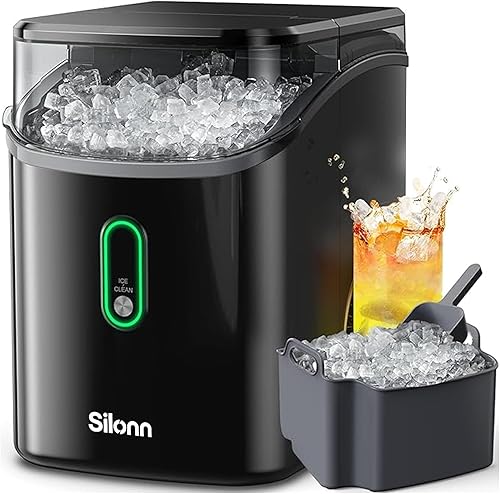
The Euhomy is rated for up to 35 lb per day and has a 1.8 lb removable basket. The Silonn is rated for up to 33 lb per day and has a removable top cover and carrying handle.
If you’re still deciding what kind of ice suits your drinks, read what nugget ice is and how it differs from other ice. For a wider look at countertop styles, our guide to the best ice makers for home compares nugget, bullet and clear ice.

Nugget ice vs pebble ice: what’s the difference?
Nugget and pebble usually describe the same broad style of soft, chewable ice. Neither name reliably signals a distinct size or texture across every brand.
Nugget, pebble, pellet and Sonic are common names for small pieces made to be easier to chew than hard, solid cubes. Individual machines can still make pieces with different sizes, density and crunch.
The machine’s description and buyer feedback can help you compare its ice. The name alone won’t tell you exactly how a piece feels in a drink.
Is pellet ice the same as nugget ice?
Pellet ice is often another name for nugget ice. Some brands use it for small, chewable pieces made from flakes pressed together.
The terms aren’t a standard size grade. If one machine calls its ice “pellet” and another calls it “nugget,” don’t assume the pieces will be identical or different just because of the names.
Is Sonic ice different from pebble ice?
Sonic ice is a familiar name for chewable nugget-style ice. The name doesn’t guarantee that every machine makes the same texture as ice served at a restaurant.
Countertop makers may use “Sonic,” “nugget” or “pebble” to describe a similar style. Compare the described texture and machine features before you choose.
Which ice works best in your drinks?
Nugget-style ice suits drinks where you want small, chewable pieces that cool the drink quickly. It’s commonly used for iced coffee, tea, smoothies and cocktails.
Euhomy describes its ice as light, airy and crunchy. Silonn describes its ice as soft and chewable, with uses that include iced tea, coffee and cocktails.
This style may not suit you if you prefer hard cubes that keep their shape. For a comparison with another broken-ice style, see nugget ice vs crushed ice.
What should you choose for iced coffee?
Choose the machine that fits your counter and the amount of ice you make, since both are described as producing chewable ice for coffee. A high daily output matters less if you only make a glass or two at a time.
For regular serving or gatherings, Euhomy’s higher stated daily output and specified basket capacity may help you plan refills. If your daily need is modest, focus on where the machine will sit and how often you’re willing to clean it.
Small pieces can cool drinks quickly, but they also take up room in the glass and are meant to be chewed. If you want ice that melts more slowly and stays firm, a machine that makes hard cubes may fit better.
How do you choose between these countertop makers?
Choose by measuring the spot, estimating how much ice you use, and deciding how you’ll store extra ice. Nugget and pebble don’t tell you whether a machine will fit your kitchen or keep up with your household.
Euhomy measures 12.28 in high, 11.14 in deep and 8.5 in wide. Silonn measures 11.3 in deep, 12.91 in wide and 8.9 in high.
Measure the counter and the space below any cabinets, then check the outlet and placement instructions in the manual. Width alone can be misleading: a narrower machine may be deeper or taller.
How much ice can each machine make at once?
Euhomy has a specified 1.8 lb basket, while Silonn’s basket capacity isn’t specified. Daily production figures describe what a machine is rated to make over a day, not how much it holds ready to scoop.
Euhomy’s stated maximum is 35 lb per day, compared with Silonn’s 33 lb. That difference may matter if you serve ice often, but it shouldn’t be confused with the amount stored in the basket.
Neither machine should be treated as a freezer for long-term storage. Euhomy recommends moving ice to a freezer-safe bag or container and freezing it within 60 minutes.
Who should skip a countertop nugget ice maker?
Skip a countertop nugget maker if you rarely use chewable ice, have no clear spot for it, or don’t want another appliance to clean. The ice style is the main reason to buy one, so a standard ice tray or a different kind of ice maker may be a better fit if you prefer firm cubes.
These machines also need water, room for use and a plan for extra ice. A stated daily output doesn’t mean the basket holds a full day’s production at once.
How should you set up and care for a nugget ice maker?
Place the machine on a suitable counter, follow its manual, and keep its water and cleaning routine simple. A few minutes spent measuring and reading the setup instructions can prevent awkward placement and avoidable cleanup.
Before choosing a spot, check the machine’s full dimensions and allow the space its manual calls for. Keep the water reservoir accessible, and position the unit where you can reach the basket and drain or clean it as instructed.
Use the water type recommended for your specific model. Euhomy’s instructions recommend filtered, purified or distilled water and advise against tap water, hard water and other liquids because mineral buildup may affect performance.
What are common setup and ice-storage mistakes?
The most common mistakes are ignoring clearance, assuming daily output equals basket capacity, and leaving extra ice in the machine. Check the manual for first-use steps and placement before filling the reservoir.
Euhomy’s instructions say to leave the unit upright and unplugged for 24 hours before first use. Once ice is made, don’t assume the basket keeps it frozen like a freezer; transfer extra ice to a freezer-safe container.
When Euhomy’s Ice Full indicator comes on, its instructions recommend gently redistributing the ice or moving it to a freezer-safe bag or container. The maker recommends freezing that ice within 60 minutes.
How often should you clean the machine?
Clean on the schedule and with the steps for your model, and descale when mineral buildup needs attention. Both makers describe a 15-minute self-cleaning cycle, but the button steps differ.
Euhomy’s instructions recommend running its cycle every 30 days or after 150 hours of use, whichever comes first. Hold the Ice/Clean button for 3 seconds to start it; after deep cleaning with descaler, run 2–3 self-cleaning cycles with fresh water and discard the first 1–2 batches.
For Silonn, hold the CLEAN button for about 5 seconds to start its cycle. Its top cover can be removed for manual descaling and deep cleaning.
Follow your model’s care instructions rather than using a cleaning mixture by guesswork. Our step-by-step guide to cleaning a nugget ice maker explains the general process, and how to descale a countertop ice maker covers mineral deposits.
Which nugget or pebble ice maker should you choose?
Choose Euhomy if its higher stated output, specified basket and larger reservoir suit your serving routine; choose Silonn if its dimensions, carrying handle and removable top cover fit better. Since nugget ice vs pebble ice is usually a naming difference, base your decision on the machine and its care needs.
Euhomy may suit a household that serves chewable ice often and wants a stated capacity for the removable basket. Its maker says the first batch takes about 5–7 minutes.
Silonn may suit buyers who value a removable cover for manual cleaning and want a carrying handle. It’s rated for up to 33 lb per day, with the first batch in about 6 minutes.
If neither machine’s footprint or cleaning routine works for you, compare more options in our best pebble ice makers for the counter and best Sonic-style ice makers guides.
Frequently asked questions
Are nugget ice and pebble ice the same?
Nugget ice and pebble ice usually refer to soft, chewable ice. Brands also use names such as pellet ice and Sonic ice, so the label can vary even when the texture and intended uses are similar.
Check the maker’s description of the ice each machine produces.
Is nugget ice softer than pebble ice?
The names don’t establish a consistent difference in softness. Both commonly describe chewable ice with a light, crunchy texture, though machines can produce pieces that feel different.
If texture matters most, check the maker’s description and buyer feedback for the exact model.
Which is better for iced coffee, nugget or pebble ice?
Either can work in iced coffee if you like small, chewable pieces that cool a drink quickly. Nugget and pebble are often used for the same ice style.
Choose based on the machine’s output, counter fit, cleaning routine and how much ice you want to make.
Do countertop pebble ice makers keep ice frozen?
Don’t assume a countertop ice maker keeps its basket frozen like a freezer. Transfer ice to a freezer-safe container if you want to store it longer, and follow the machine’s instructions for handling full baskets.
Euhomy recommends freezing its ice within 60 minutes.
Which makes more ice, the Euhomy or Silonn?
Euhomy states a maximum daily output of 35 lb, compared with 33 lb for Silonn. Those figures describe daily production, not how much ice will be ready at one time.
Water and use can affect how much ice you have available.


