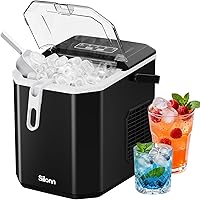
Countertop Ice Maker Types Explained
There are three main countertop types: nugget makers for chewable pebble ice, bullet makers for fast cube-style ice, and clear square makers for slow-melting restaurant ice. Pick nugget for drinks and chewing, bullet for speed and small spaces, clear square for entertaining and spirits.
On this page (10 sections)
- What are the different types of ice makers?
- How does a nugget ice maker make chewable pebble ice?
- How does a bullet ice maker work?
- What makes clear square ice different?
- Which type fits your kitchen and counter space?
- How do output and speed compare across the types?
- Which type makes the best ice for drinks and cocktails?
- How much noise does each type make?
- Which type is easiest to clean and care for?
- Which type should you buy?
The main different types of ice makers you'll find on a countertop make three kinds of ice: chewable nugget ice, fast bullet ice and clear square ice. The ice style decides how the machine works, how fast it produces, how much space it needs and how often you clean it.
This guide compares each format using the specs of three popular models. It also covers which type suits a home bar, a small kitchen or a party setup.
Read it before you compare brands, because the ice style matters more than the label on the front.
What are the different types of ice makers?
The three countertop types are nugget, bullet and clear square, and each one makes ice with a different mechanism. The mechanism is what sets the output, the footprint and the cleaning routine, so it's the first thing to sort out.
- Nugget makers scrape flake ice off a chilled cylinder, then squeeze it into chewable pellets. Kismile's 35 lb model uses this format.
- Bullet makers freeze water around small metal prongs in a basket, then release round or bullet-shaped cubes. The Silonn model follows this design.
- Clear square makers freeze water slowly in a clear mold so trapped air escapes before the block forms. Frigidaire's EFIC452-SS builds square cubes this way.
The rest of this guide takes each type in turn. It also covers how to weigh up output, footprint, noise and care so you can match the format to your kitchen.
If you already know you want nugget ice, our roundup of the best rated countertop ice maker compares more options.
How does a nugget ice maker make chewable pebble ice?
A nugget maker makes chewable ice by scraping flake ice from a cold drum and pressing it into soft, layered pellets. The compressed layers give each nugget its crunch and its slower melt compared with crushed ice.
Kismile's nugget maker is the strongest example here. It has a 1.1 L water tank and Kismile says it makes 35 lb of ice in 24 hours, with the first batch in about 7 minutes.
That puts nugget output close to bullet output while keeping the chewable texture.
The texture matters for how you use it. Nugget ice suits slushies, cocktails, sodas and chewers who like to crunch the ice after the drink is gone.
It also packs well into cups because the soft pellets settle into the gaps.
Nugget makers use an auger, so they need more routine cleaning than the other two types. Kismile fits a self-clean cycle that runs when you press and hold the ON/OFF button for 5 seconds; Kismile says the cycle finishes in about 15 minutes.
Run it more often than you would on a bullet maker, because wet flake ice can build up around the auger.
Noise is another factor. Kismile says the maker runs at 43 dB, which is quiet enough to keep in an open kitchen.
That's a fair claim for a nugget machine, because the auger adds movement that bullet makers don't have.
Pick nugget ice if you want chewable pellets for drinks and slushies. Skip it if clear, slow-melting blocks matter more to you.
For maintenance timings on this format, read how long do countertop ice makers last.
How does a bullet ice maker work?
A bullet maker makes ice by freezing water around small cold prongs in a basket, then lifting the prongs so the cubes drop out. The round or bullet shape comes from the prong design, and the cycle is short because each cube is small.
The Silonn portable maker is the compact example. It measures 8.7 x 11.4 x 11.6 inches and weighs 13.7 lb, so it fits on a kitchen island or desk.
Silonn says it makes bullet ice in about 6 minutes, up to 26 lb per day, with 1.3 lb of storage and a 1.2 L tank.
The trade-off is ice quality. Bullet cubes are not fully clear and they melt faster than dense clear square ice.
For everyday drinks that's rarely a problem, and the speed makes bullet makers the easiest type to live with.
Bullet makers also suit small kitchens and travel. The Silonn model has a carry handle and a scoop that attaches to the basket.
It weighs little enough to move between rooms or load into an RV.
Cleaning is simpler than on a nugget maker. Silonn fits an automatic self-clean function: remove the basket, add water and hold the CLEAN button for 5 seconds.
Silonn says the cycle takes about 30 minutes.
Choose bullet ice for speed, small footprints and portability. Pass on it if you need clear, decorative cubes for cocktails or whisky.
If you plan to park a maker in one spot and fill it from plumbing, see countertop ice maker with water line before you buy.
What makes clear square ice different?
Clear square ice is different because it freezes slowly and releases trapped air, so the block comes out transparent and dense. The clear structure is what makes it melt slowly and look right in a glass.
The Frigidaire EFIC452-SS is the clear square option here. It's a stainless steel model that makes up to 40 lb per day and 24 square cubes in under 15 minutes.
It has a 2.3 qt water tank and two cube sizes, and the basket holds up to 2.4 lb at a time.
The Frigidaire takes more counter space than the other two types. It measures 14 x 11 x 15 inches, so check the spot on your counter before you buy.
In return you get restaurant-style ice that suits whisky, wine, iced tea and entertaining.
Frigidaire's controls are built for hosting. There's a transparent window so you can watch the ice level and a digital LCD panel for cube size and settings.
A drain plug makes emptying and cleaning easier.
Clear square ice is the slowest melting of the three types. It also takes longer to make the first batch than bullet or nugget ice.
That's the trade you accept for clear, long-lasting cubes.
Pick clear square ice for spirits and parties where appearance and slow melt matter. Skip it if speed or a tight footprint is your priority.
For running costs on this type, read how much electricity does a countertop ice maker use.
Which type fits your kitchen and counter space?
The right type depends on the free counter width you have and whether the maker will move around. Nugget and bullet makers are the compact picks, while clear square makers take more room but give you the best-looking ice.
Use the footprint numbers from the three models to judge your spot.
| Type | Model | Daily output | First batch | Footprint |
|---|---|---|---|---|
| Nugget | Kismile 35 lb | 35 lb | About 7 min | 12.2 x 11.02 x 8.27 in |
| Bullet | Silonn | 26 lb | About 6 min | 8.7 x 11.4 x 11.6 in |
| Clear square | Frigidaire EFIC452 | 40 lb | Under 15 min | 14 x 11 x 15 in |
Bullet makers win on footprint. The Silonn is the smallest of the three and has a handle, so it's the easiest to move between the kitchen and a patio or RV.
Nugget makers sit in the middle, and clear square makers need the most headroom.
Leave clearance around the vents and room to lift the lid or basket. Measure the counter depth as well as the width, because a deep maker can overhang the front edge of a shallow counter.
How do output and speed compare across the types?
Output ranges from 26 lb to 40 lb per day, and the first batch ranges from about 6 to 15 minutes. Higher output matters if you host often or use ice all day.
The Silonn bullet maker makes the first batch fastest, in about 6 minutes. The Kismile nugget maker is close at about 7 minutes, and the Frigidaire clear square maker takes under 15 minutes.
Daily output is the number to weigh for regular use. The Frigidaire leads at 40 lb per day, the Kismile is next at 35 lb and the Silonn is lowest at 26 lb.
A small household can get by on 26 lb; a family that fills pitchers daily will want more.
Storage capacity matters too. The Silonn holds 1.3 lb of ice and the Frigidaire basket holds 2.4 lb.
Ice sits in the basket until you scoop it, so a larger basket means fewer trips during a party.
Match output to your busiest day, not your quietest one. If you rarely host, a 26 lb bullet maker covers everyday drinks.
If you fill coolers or serve cocktails regularly, the 35 to 40 lb nugget and clear models earn their counter space.
Which type makes the best ice for drinks and cocktails?
Nugget ice suits cocktails and sodas, bullet ice covers everyday drinks, and clear square ice is the best choice for spirits served neat or on the rocks. The ice style changes how the drink looks, how fast it dilutes and how it feels in the glass.
Clear square cubes dilute slowest, so they suit whisky, bourbon and any drink where you want the flavor to stay strong. Their transparency also looks right in a tumbler.
Nugget ice packs into a glass and stays chewable. It's the type to pick for slushies, blended drinks and sodas, where the soft texture and slow chew are the point.
Kismile says the compacted flakes preserve flavor well in mixed drinks.
Bullet ice is the general-purpose option. It's fast, it comes in two sizes on the Silonn, and it works for water, juice and iced tea.
It just won't look as clean in a clear glass as square ice.
Choose clear square for spirits, nugget for cocktails and slushies, bullet for everyday drinks. If you're building a home bar, the ice type is the first decision before brand or price.
How much noise does each type make?
Noise varies by mechanism: nugget makers add auger noise, bullet makers add fan and compressor noise, and clear square makers run a longer freeze cycle. The quietest units keep the compressor and fan insulated and move ice gently.
Kismile gives a noise figure for its nugget maker: 43 dB, measured in a noise-controlled environment. That's a low figure for a countertop appliance and quiet enough for an open-plan kitchen.
A bullet maker's short cycle means short bursts of compressor noise, while a clear square maker runs longer per batch.
Neither runs as quietly as the Kismile's stated figure if the auger design is well damped.
Place the maker away from the spot where you sit or watch TV. A maker next to a fridge compressor or an open doorway will sound louder than the same unit tucked into a corner.
Pick the quietest unit you can find if the maker will live near a living area. For nugget buyers, the 43 dB Kismile is the safest choice on paper.
For bullet buyers, look for a maker that publishes a noise figure.
Which type is easiest to clean and care for?
Bullet makers are the easiest to clean, nugget makers need the most frequent care, and clear square makers sit in the middle. The mechanism and the wetness of the ice drive how often each type needs attention.
Nugget makers have an auger and a cold drum close together, so wet flake ice can build up. Kismile's self-clean cycle takes about 15 minutes, but run it more often than you would on the other types.
Wipe the ice chute as well as the tank.
Bullet makers are simple. The Silonn's self-clean function runs for about 30 minutes after a 5-second press of the CLEAN button.
Its removable basket and scoop come out for washing, and the tank drains easily.
Clear square makers have a drain plug that speeds up emptying. The Frigidaire model has this feature, plus a removable basket and scoop.
Wipe the water tank and basket on a regular schedule and run a deep clean when you see film or scale.
Clean the nugget maker most often, the bullet maker least often and the clear square maker on a steady schedule. Whatever the type, empty the tank when the maker won't run for a few days.
Standing water is the fastest way to get a cloudy first batch.
Which type should you buy?
The right different types of ice makers come down to the ice style you'll actually use and the counter space you can spare. Start with nugget ice for drinks and chewable pellets, bullet ice for speed and small kitchens, and clear square ice for spirits and entertaining.
Pick the Kismile 35 lb Nugget Ice Maker if most of your ice goes into cocktails, sodas or slushies and you want chewable pellets. It's our top pick overall, with 35 lb of daily output and a 43 dB running noise.
Pick the Silonn Portable Bullet Ice Maker if counter space is tight, you move the maker between rooms or you want fast ice for everyday drinks. It's the smallest and lightest of the three and makes its first batch in about 6 minutes.
Pick the Frigidaire EFIC452 Extra Large Clear Ice Maker if you host often and want clear, slow-melting square cubes for whisky and wine. It leads on daily output at 40 lb, though it takes the most counter space.
Nugget ice is the safest everyday choice for most homes because it covers cocktails, sodas and chewing without the footprint of a clear square maker. Move up to clear square ice only when appearance and slow melt are the reason you're buying.
Our roundup of the best rated countertop ice maker compares more models by type if you want to shop beyond these three.
Frequently asked questions
What is the most common type of countertop ice maker?
Bullet ice makers are the most common countertop format because they make ice in about 6 minutes and fit in a small footprint. Nugget and clear square makers are growing in popularity for chewable and slow-melting ice.
Which ice type melts slowest in a drink?
Clear square ice melts slowest of the three countertop types because it is dense and has fewer air bubbles. Bullet ice melts next, and nugget ice melts fastest but stays chewable the longest.
Can a nugget ice maker make clear square ice?
No. Nugget makers crush and compact flake ice into chewable pebbles, so they cannot form the dense, transparent blocks a clear square maker produces.
Each countertop type makes only its own style of ice.
Do countertop ice makers need a drain or water line?
Most countertop makers fill from a removable water tank, so no plumbing is needed. A few larger models accept an optional water line, and most collect meltwater in the reservoir rather than draining it away.
How long does the first batch of ice take?
Bullet makers make the first batch in about 6 minutes, nugget makers in about 7 minutes and clear square makers in under 15 minutes. Output per day is what matters most for regular use.