Do Countertop Ice Makers Use Freon?
No, most countertop ice makers do not use freon. They run on R600a, a modern refrigerant, and the older R-134a and R-22 refrigerants are on the way out; the coolant sits sealed inside the cooling circuit and never touches your ice.
On this page (10 sections)
- Do countertop ice makers use freon?
- Which refrigerants do countertop ice makers use now?
- How does the cooling system in an ice maker work?
- Does the refrigerant touch the ice or the water?
- Is R600a safe in a countertop ice maker?
- Do you need to recharge or service the refrigerant?
- Does the refrigerant type affect performance or cost?
- Which countertop ice makers should you consider?
- What should you check before you buy?
- How do you keep a freon-free ice maker running well?
No, most countertop ice makers do not use freon. They run on R600a, a modern refrigerant found in home fridges and small ice machines, and the older R-22 and R-134a gases that people still call freon are fading from new appliances.
The confusing part is the word itself. Freon is a brand name, not a chemical, so the real question is which refrigerant a machine holds and whether it can reach your ice.
Here is how the cooling side works.
Do countertop ice makers use freon?
Most don't. Both countertop models we looked at run on R600a, and that matches the wider shift in small appliances away from older refrigerants.
Freon started as a DuPont trade name for a family of chlorofluorocarbons, the gases that damaged the ozone layer. R-22 was the common one, and it was phased out of new equipment years ago.
Today's small ice makers usually hold R600a, a hydrocarbon refrigerant also called isobutane. It cools well, holds a small charge, and has a much lower impact if it escapes.
So when someone asks whether ice makers have freon, the useful answer is that new countertop units almost always don't, and the box or manual names the gas it actually uses.
Which refrigerants do countertop ice makers use now?
R600a is the common one, with R-134a still around in older or larger machines. R-22 only shows up in old equipment.
- R600a (isobutane): a hydrocarbon with a small charge, used in most new countertop models.
- R-134a: a hydrofluorocarbon that replaced R-22, still in some machines and car systems.
- R-22: the old freon gas, gone from new home appliances.
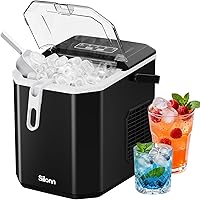
The Euhomy 44 lb Nugget Ice Maker uses R600a, and so does the Silonn 36 lb Nugget Ice Maker with Carry Handle. Different makers can choose differently, so read the label on the machine or in the manual if it matters to you.
None of these gases are something you add at home. The circuit is filled and sealed at the factory.
How does the cooling system in an ice maker work?
A sealed loop moves heat out of the water, and the refrigerant is the fluid doing the moving. A compressor squeezes the gas, a condenser releases heat, and an evaporator gets cold enough to freeze water.
In a nugget machine, the ice forms on a chilled metal surface and gets scraped or extruded into soft pellets. A fan pushes heat out the back or side vents, which is why the machine needs breathing room.
On the Euhomy, a 1.8L tank feeds the process and one touch of the ICE button starts it, with the first batch in 7 to 10 minutes. Silonn says its first ice comes in about 5 minutes from a similar press-and-go control.
The refrigerant never mixes with the water at any point in that loop.
Does the refrigerant touch the ice or the water?
No. The refrigerant stays inside copper or steel tubing, and the water sits in a separate tank and freezing chamber.
Think of it as two rooms with a shared wall. The cold wall chills the water, but the fluid on the other side never crosses over.
That separation is why the gas choice has no effect on how your ice tastes. A refrigerant leak would show up as a machine that runs but stops cooling, not as a funny flavor in a drink.
If your ice tastes off, the cause is usually the water, a dirty basket or scale in the tank, not the coolant. Our guide to how much electricity does a countertop ice maker use covers the compressor side if you want to understand the power draw too.
Is R600a safe in a countertop ice maker?
Yes, in normal use. R600a is flammable, but the amount inside a countertop unit is small and locked inside a sealed circuit.
The standard warning in the manual is there for technicians handling a repair. For a home user, the practical points are simple: don't drill into the housing, don't try to open the sealed system, and keep the vents clear.
A machine that sits on a counter with air around it and no damage to the cabinet poses little risk. Ventilation matters more for performance than for safety, because a blocked vent makes the compressor work harder.
If a unit is dropped or the back panel is punctured, stop using it. That is the one case where the gas could escape.
Do you need to recharge or service the refrigerant?
No. The circuit is sealed for the life of the appliance, so there is nothing to top up and no routine service for the gas.
When a countertop ice maker stops making ice, the refrigerant is rarely the reason. Scale on the evaporator, a clogged air filter, a full basket sensor or a weak fan are far more common.
The Euhomy has a 20-minute self-clean cycle on its CLEAN button, and the Silonn runs a self-clean of about 15 minutes. Keeping the water side clean protects the cooling performance without touching the sealed loop.
For a machine that still struggles, our guide to how to use countertop ice maker covers a fresh start on a new unit.
Does the refrigerant type affect performance or cost?
Not much. R600a cools efficiently with a small charge, and R-134a works fine too; the bigger performance factors are compressor size, insulation and venting.
The Euhomy runs at 135 watts and the Silonn at 150 watts, which tells you more about running cost than the gas name does. Output is rated at 44 lb and 36 lb per day respectively.
A machine's production rate and how often it cycles on depend on room temperature and how much ice you pull. Neither gas makes a countertop unit into a commercial machine.
That matters for do ice makers use a lot of water too: water use tracks ice output, not the refrigerant.
Which countertop ice makers should you consider?
Pick a nugget machine if you want chewable ice, and match the size to your counter. Here are two models worth comparing plus the cleaner that keeps either one running.
Euhomy 44 lb Nugget Ice Maker
This one suits a household that goes through ice fast, with 44 lb a day from a 1.8L tank and soft nugget ice in 7 to 10 minutes.
The one-touch ICE and LIGHT buttons keep it simple, and the 135-watt draw is modest for the output. It sits at 13.9 by 9.85 by 14.95 inches.
Silonn 36 lb Nugget Ice Maker with Carry Handle
This one suits renters and small kitchens, with a carry handle and a body that moves from counter to patio without much effort.
The 36 lb a day output covers most homes, and indicator lights flag an empty tank or full basket. It runs at 150 watts.
Affresh Ice Machine Cleaner
This one suits anyone who wants to protect the cooling side by keeping scale off the evaporator and out of the tank.
Scale is the usual reason a machine slows down, so regular cleaning is the practical habit that keeps ice flowing. If you want a wider shortlist, our guide to rated countertop ice maker compares more options.
What should you check before you buy?
Check the refrigerant on the label if it matters to you, and check the water side either way. The gas choice is settled for most buyers: newer units are R600a or another modern refrigerant.
Look at output, footprint and how the machine cleans, because those affect your counter and your routine. A self-clean cycle on the Euhomy or Silonn cuts the manual scrubbing you do.
If you're planning where it goes, measure the space and leave room at the vents. A tucked-in machine runs longer and makes less ice per hour than a well-vented one.
So the short answer to do ice makers have freon: new countertop models mostly don't, and the gas is sealed away from your glass in any case. Pick the machine for its capacity and cleaning routine, then keep the water side clean.
How do you keep a freon-free ice maker running well?
Clean the water side and let the machine breathe. Those two habits do more for ice quality and machine life than any concern about the refrigerant.
Descale on the schedule your manual gives, or every nine months with a product like Affresh, and rinse the basket and scoop often. A clean tank means no mineral taste in soft nugget ice.
Keep the vents clear and the machine level, and empty the basket if you won't use ice for a while. None of that involves the sealed refrigerant circuit.
Do ice makers have freon? Most modern countertop units don't, and the ones that hold R600a are safe to use when you leave the sealed system alone.
Choose a capacity that fits your counter, clean it regularly, and the gas inside is one less thing to think about.
Frequently asked questions
Is the refrigerant in an ice maker dangerous?
R600a is flammable in large amounts, but the charge in a countertop unit is small and sealed inside metal tubing. You only face a risk if that circuit is punctured, so don't drill or pry into the machine's housing.
Can refrigerant leak into the ice?
No, because the ice forms on a cold metal surface in a sealed loop separate from the water you pour in. A leak would show up as weak cooling or a warm cabinet, not as contamination in your glass.
Why does the manual warn about flammable refrigerant?
R600a is a hydrocarbon, and appliance manuals carry a standard warning about it. The note tells technicians how to handle the sealed system during repairs; for normal home use you follow the manual's ventilation and cleaning steps.
Do I need to recharge refrigerant in a countertop ice maker?
No, the circuit is sealed for the life of the machine. If a unit stops making ice, the refrigerant is rarely the cause; scale buildup, a clogged filter or a failed fan is a more likely culprit.
Does freon-free mean the ice tastes better?
Refrigerant never touches the water, so it doesn't affect taste either way. Clean water, a clean basket and regular descaling are what keep ice tasting fresh.